
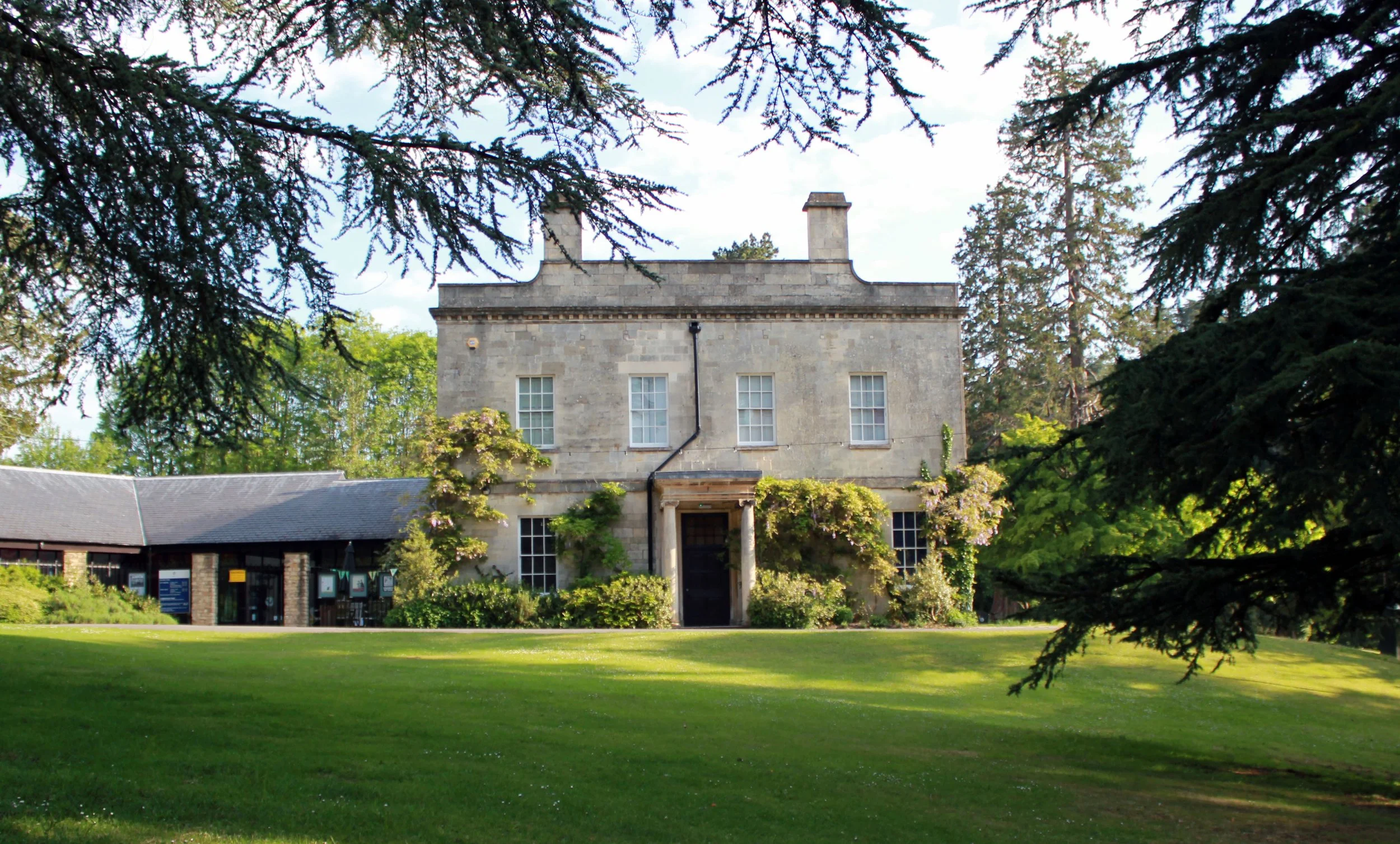
You can use this visual story to find your way around and make the most of your visit to Museum in the Park. There is also be print-friendly visual story and an easy read visual story.
You can use this visual story to find out:
· how to get around the museum
· who you might meet
· the things you might see, hear and smell during your visit.
The pictures in this visual story aim to give you a sense of what the spaces at the museum are like. Some areas do change from time to time, so please be aware that things might not look exactly the same as in the pictures, or from one visit to the next.
You can look at the whole visual story or click the links below to jump to each of the sections.
More information for visitors with additional access requirements
The outside of the museum
Front of Museum in the Park. Click image to enlarge.
The Museum in the Park is an old building, with a newer extension, and a garden.
A museum is a place that looks after objects that are important for history, art, science and culture. Museums are open for people to enjoy and learn about these things. Museum in the Park is a museum about people and places in Stroud District.
The Museum is located just outside Stroud town centre, in Stratford Park. There are accessible parking spaces.
The museum is free to visit. Most visits do not need to be booked. (Please contact us in advance if you plan to visit in a group of more than 10 people, or if you are part of a group that has additional needs.) You can choose to donate some money to support the museum if you want to.
Main entrance
The gate into the Museum. There is step-free access into and around the museum. Click image to enlarge.
This is the gate into the courtyard at the front of the museum. The courtyard has flagstones which are a bit uneven.
Well behaved dogs are welcome in the front courtyard, where we provide a water bowl. Trained assistance dogs are welcome in the Museum and Walled Garden.
The courtyard at the main entrance to the museum. Click image to enlarge.
This is the main entrance door into the museum. Outside the door is rubber matting. The door automatically opens and closes.
The reception desk
The Reception desk has two levels. Click image to enlarge.
When you come into the museum, there will be a reception desk. There is always a member of staff at this desk.
The member of staff will be wearing a black lanyard around their neck. They are there to say hello and help you during your visit.
If you have any questions or problems, please ask the person at the Reception desk.
Different people work there at different times of day.
Museum staff and volunteers
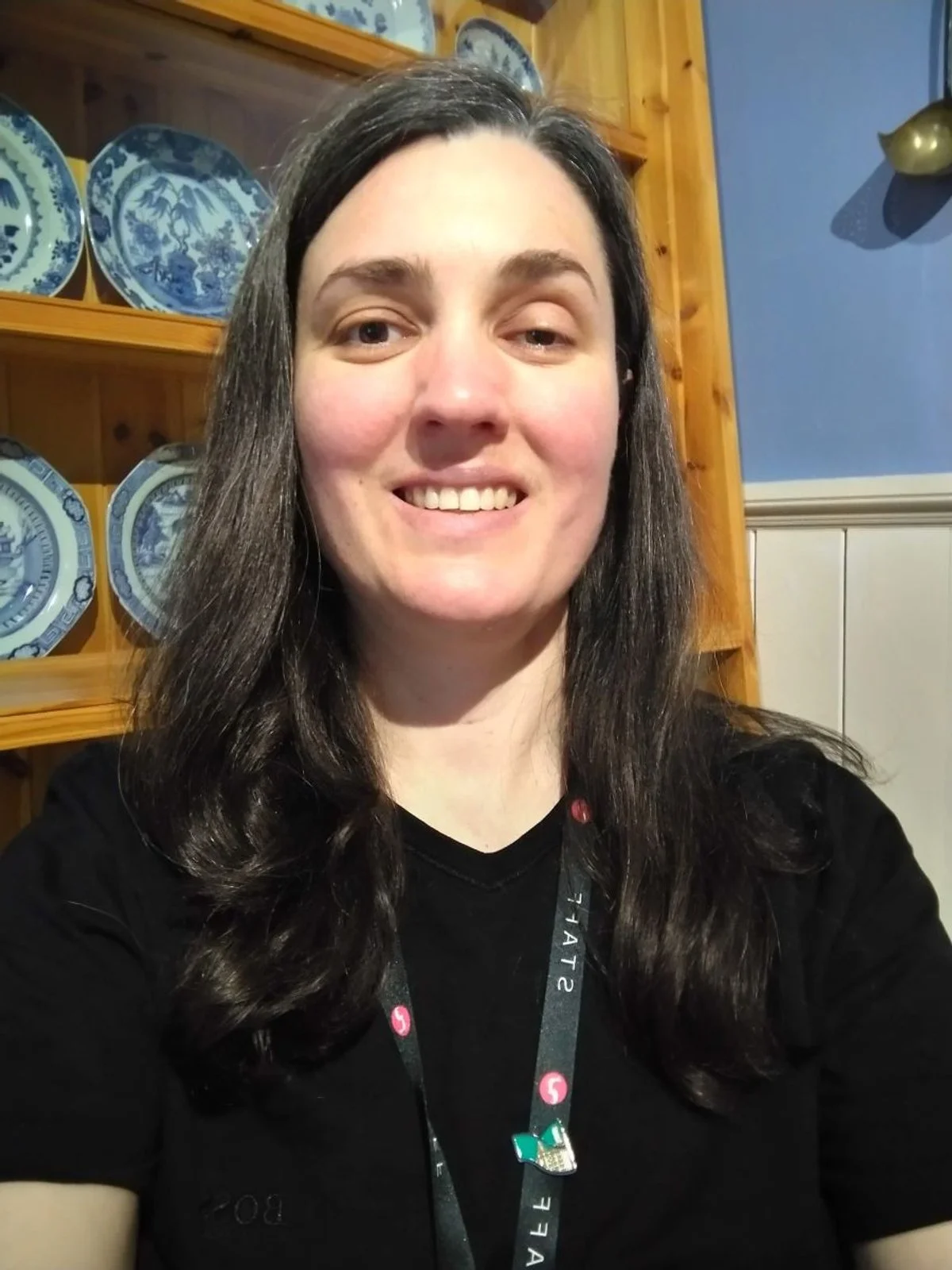
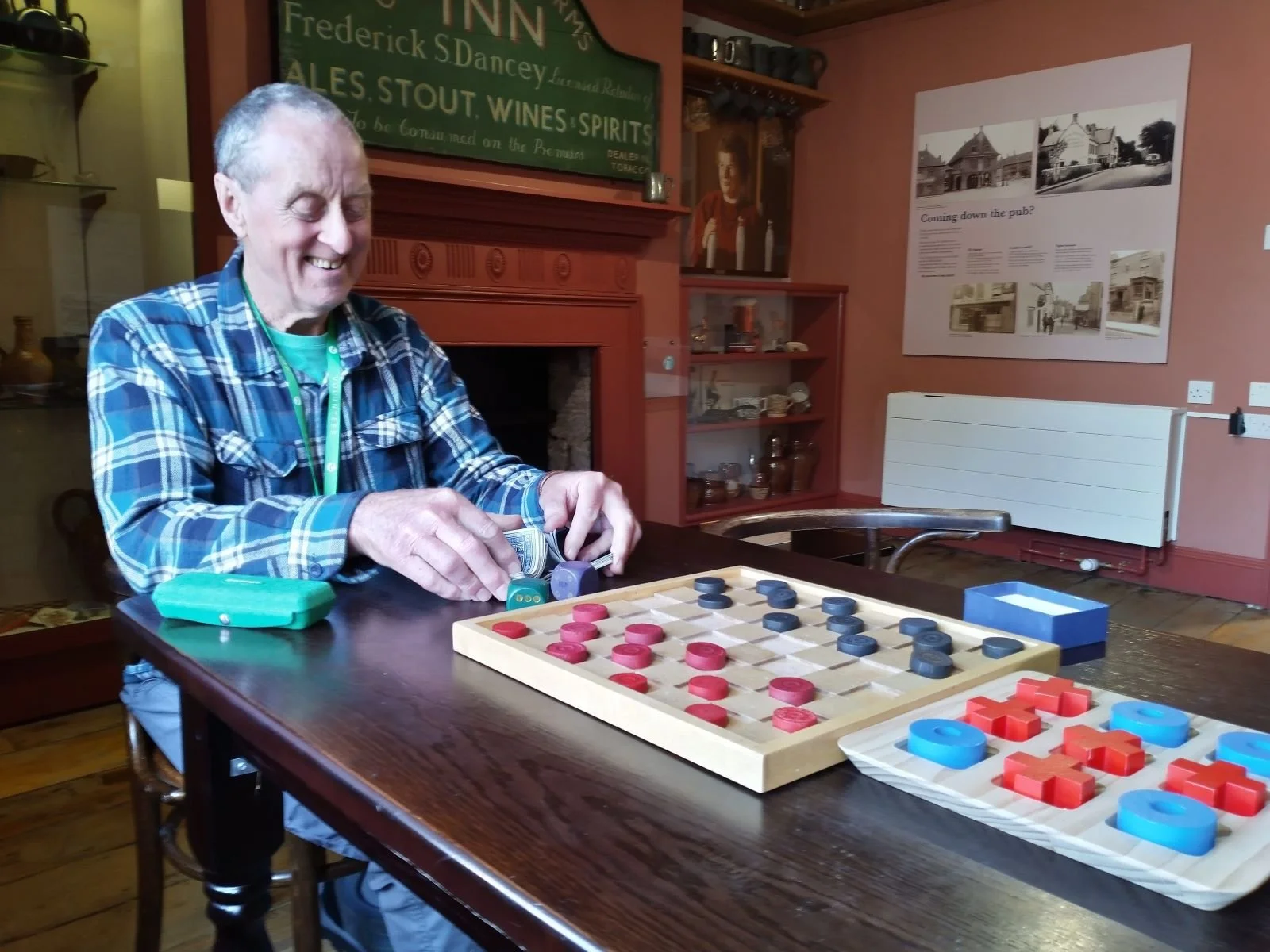
The museum staff and volunteers can help you if you need them to.
Staff and volunteers will be smart and casually dressed. Staff wear a black lanyard with the Museum in the Park logo on, with a name badge. Volunteers wear a green lanyard with the Museum in the Park logo on and a Volunteer badge.
You can ask our staff and volunteers for help, directions and for information about the museum. There will always be a staff member near the Reception desk. There is often a volunteer in the museum.
Helpful resources
Family Explorer Trails are available free of charge. Click image to enlarge.
You can ask to borrow a magnifying glass, a large print guide or coloured overlays if you would like to. You can also ask to borrow an adult-sized manual wheelchair to use during your visit if you need to.
You can also collect a Family Explorer Trail to use to find objects in the Museum. There are also pencils and clipboards for you to borrow.
We don’t have a dedicated quiet space.
The museum is often quieter between 3 and 4:30pm on weekdays during term time if you would like to visit when fewer people are around. In school term-time the museum can be busier and louder on days when a school group is visiting. During school holidays we are busiest when we have family activities on.
Please feel free to check what’s on or contact us to check whether a school is booked in or if there is something on the day you want to visit.
If you need a calm, quiet indoor space to use during your visit, you can ask a member of staff. The member of staff will do their best to help direct you to a quieter area. If you are able to contact us before your visit to arrange a quiet space beforehand, that would help us, but if you can't we will try our best to help during your visit. You can go into the Walled Garden if you need to. This is usually a quieter space.
Toilets
There are toilets near the entrance. There are male toilets, female toilets, and family room with a baby changing area.
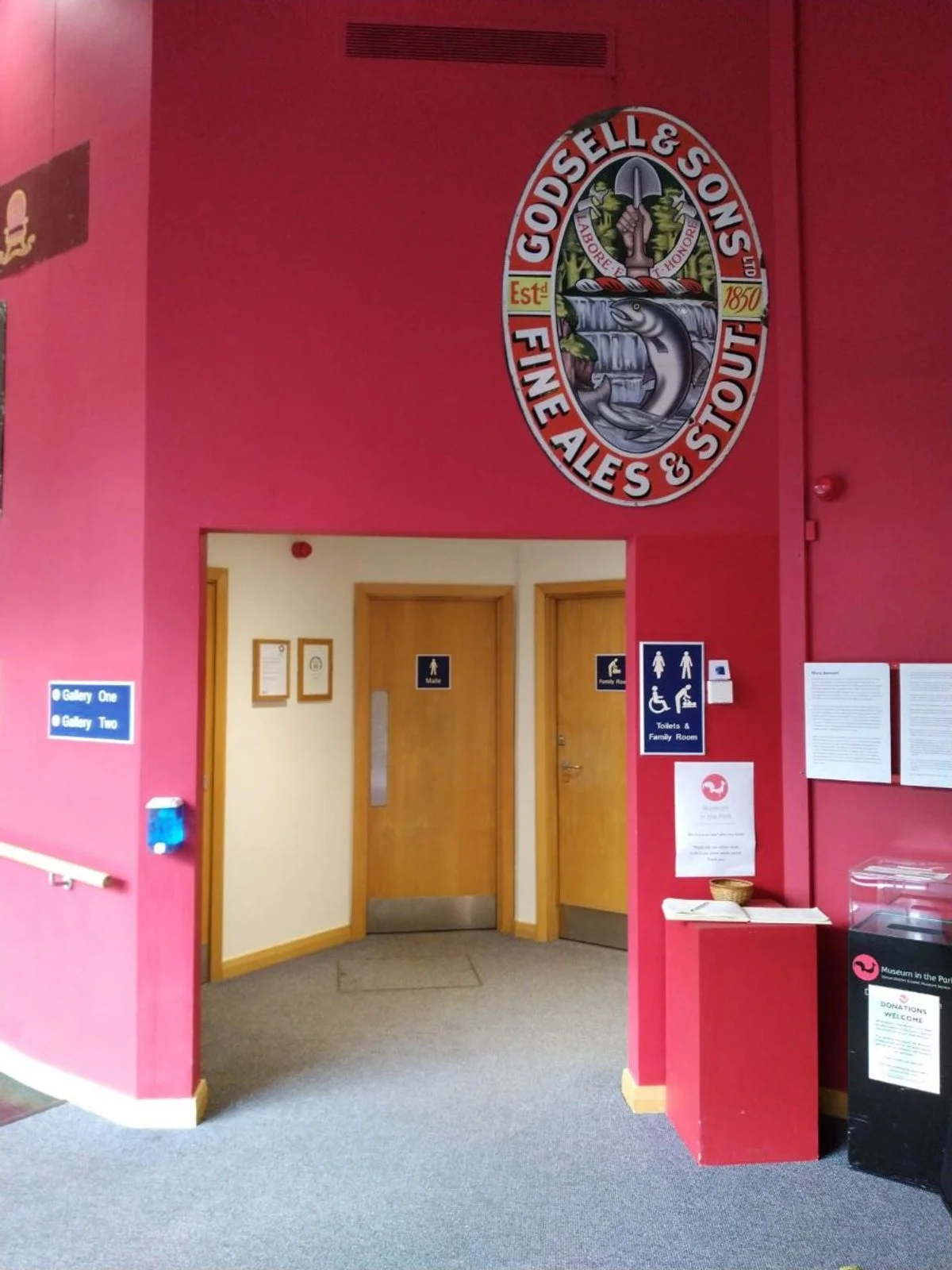
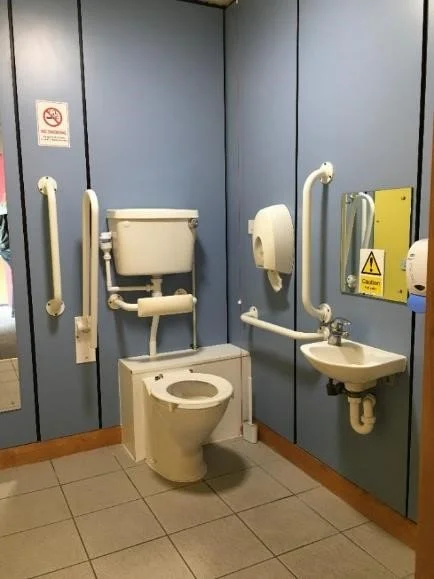
There is an all gender accessible toilet. Transfer is from the right of the toilet. The sink has lever taps. There is 1 hand dryer, which is noisy when you put your hands into it. There is an emergency alarm call cord (red) which alerts the staff at the museum reception.
The hand dryers in the toilets are noisy when you put your hands into them. There are paper towels to use if you prefer.
You might smell cleaning products and air freshener in the toilet area.
The nearest Changing Place is located at Allsorts, Brunel Mall, London Road, Stroud, Gloucestershire, GL5 2BP and is open Monday-Saturday 10am-3pm. Allsorts recommend calling ahead on 01453 750474 and more information is available on the Allsorts website.
Refreshments
Visitors enjoying refreshments in the foyer. Click image to enlarge.
If you get hungry or thirsty, you can buy snack food or drink. We ask visitors not to eat or drink in the museum display rooms. This helps us to protect the objects in our care.
You can sit inside the foyer. You might hear people talking and the hot drink machine working. You might hear people talking. You might hear the donation box working when it moves. You might smell coffee and other hot drinks.
You could sit outside in the courtyard. You might hear people talking. Dogs are allowed in the courtyard. Only trained assistance dogs are allowed in the museum
Please enjoy picnics in Stratford Park. Click image to enlarge.
We politely ask that picnics are enjoyed outside in the park and not in the walled garden or indoor areas of the museum.
In Stratford Park there are lots of trees, large grassy lawns, benches, a lake, a bandstand, two children’s play area, a miniature railway (on selected dates), and woodland.
If the weather is poor, there is a small outdoor but undercover seating area within the museum courtyard that can be used for picnics (this is only accessible by some steps).
Gift Shop
There is a gift shop at the museum. Click image to enlarge.
On the right as you enter the museum, there is a gift shop where you can buy gifts like toys, books and things for the home.
The things on display in the shop will change throughout the year, so please be aware that things might not look exactly the same as in this picture, or from one visit to the next.
Enjoying the museum displays
Floorplan of Museum in the Park. Click image to enlarge.
Museum in the Park is a museum about people and places in Stroud District.
There are lots of interesting things inside the museum. Some will be things you have seen before. Some things will be different.
In the museum there are displays on 2 floors. Each room in the museum has a different theme.
You can use this floorplan to help plan your visit and to find your way around. There are also floorplans displayed around the museum.
Each room has a name and number. You can look on the door for signs to help you find your way around. Click image to enlarge.
You can look on doors and walls to find out the name and number of each room to help you find your way around.
You can visit the rooms in any order you want to. You can just go and see the parts that you want to see.
A visitor reading a display panel to find out more. click image to enlarge.
There are lots of interesting things at the museum. Some will be things you have seen before. Some will be different. Many things are in glass display cases to protect them. There are also things to look at that are not in display cases.
It helps the museum if you do not touch the old objects.
Writing and pictures on the wall and labels in the display cases will tell you about things on display.
There are also folders in each room which have a list of all the things on display inside.
There is seating in most of the rooms. click image to enlarge.
There are seats in the museum if you want to rest.
There are benches, window seats, stools or chairs in most of the rooms in the museum.
Going to the museum displays
This is the door into the museum. Click image to enlarge.
This is the door into the museum displays. The things on display are about people and places in Stroud District.
Ground floor in the museum
Room 1, Running a Home. Click image to enlarge.
This is Room 1. It is called Running a Home.
The displays are about washing and ironing clothes, storing and cooking food and cleaning homes in the past.
Sometimes this room can be busy.
You might be able to smell carbolic soap. This was a type of soap often used for washing clothes in the past.
You can listen to a local woman’s memory of washing day during the 1930s. You can also listen to a local writer called Laurie Lee reading some of his book. The book is called ‘Cider with Rosie’. It is about Laurie’s childhood.
Hanging on the wall are some pieces of fabric that have been starched. You can touch these if you want to. You can sit on the wooden chair in the kitchen area. You can play with the toy vacuum cleaner.
Room 2, Here and Now. Click image to enlarge.
This is Room 2. It is called Here and Now.
In this room, there is a display of clocks. There is a map on the wall of the area of Gloucestershire.
This space is really a corridor. It can be busy in here. It is also where the lift is.
You can set the time on the toy clock and use the board to record information about the day. You can look at the map to see where different places near Stroud are.
Room 3, Foundations. Click image to enlarge.
This is Room 3. It is called Foundations.
In this room the displays are about the different rocks found in this area. There are different tools to look at, that were used by people in the past to shape stone. There are fossils of dinosaurs and remains of other prehistoric creatures.
This room can be bright if it is sunny outside.
You can use can the books, jigsaw and toys on the red bench. You can watch a video of a person using tools to work with stone. You can watch a slideshow of photographs of minerals.
Room 4, Staircase Hall. Click image to enlarge.
This is Room 4. It is called Staircase Hall.
In this room there are 2 big pictures and 2 clocks. When you are ready, you can go upstairs using these stairs.
This room can be busy. This room can be bright if it is sunny outside.
You can use the plastic click wheel to measure distances by rolling it along the floor. You can use the roller ball and computer screen to find out more about the landscape painting on the wall. The painting shows a view across an area of Stroud in the past.
Room 5, And Then Came People. Click image to enlarge.
This is Room 5. It is called And Then Came People.
In this room are things that were found underground, by people called archaeologists.
This room can be a bit darker. In this room there are a few real human bones, including a real skull belonging to a person who lived in the past. If you don’t want to see these, you don’t have to go into this room.
You can use the wooden sticks to make Roman numerals. You can play a game called Nine Men’s Morris. You can play with the toy Stone Age people. You can watch and listen to a video of an archaeologist showing how flint tools were made by people in the past.
Room 6, the Little Gallery. Click image to enlarge.
This is Room 6. It is called the Little Gallery.
In this room are pictures made by local artists in the past. There is also a tricycle hanging from the ceiling.
This room can be a bit colder. It is normally a bit quieter in here. You can look at artworks made by local artists.
Room 7, Collectors’ Room. Click image to enlarge.
This is Room 7. It is called the Collectors’ Room.
In this room are different collections of types of objects. There is also a display in this room which changes every few months. You can check What’s On for details, if you want to about this display.
There are real birds that used to be alive on display in this room. If you don’t want to see them, you don’t have to go in this room.
This room is sometimes closed, so a booked group can use it. There will be a sign on the door telling you if the room is closed and you can’t go in.
You can gently open the numbered drawers to see inside. You might smell the substances used to preserve the beetles, butterflies and moths if you open the wooden drawers.
You can play with the toys and books.
Room 8, Heat and Light. Click image to enlarge.
This is Room 8. It is called Heat and Light.
In this room there are things that people in the past used to light and heat their homes.
This room is really a corridor. You might hear the recordings of people speaking that play in Room 1 next door.
Getting to the upper floor
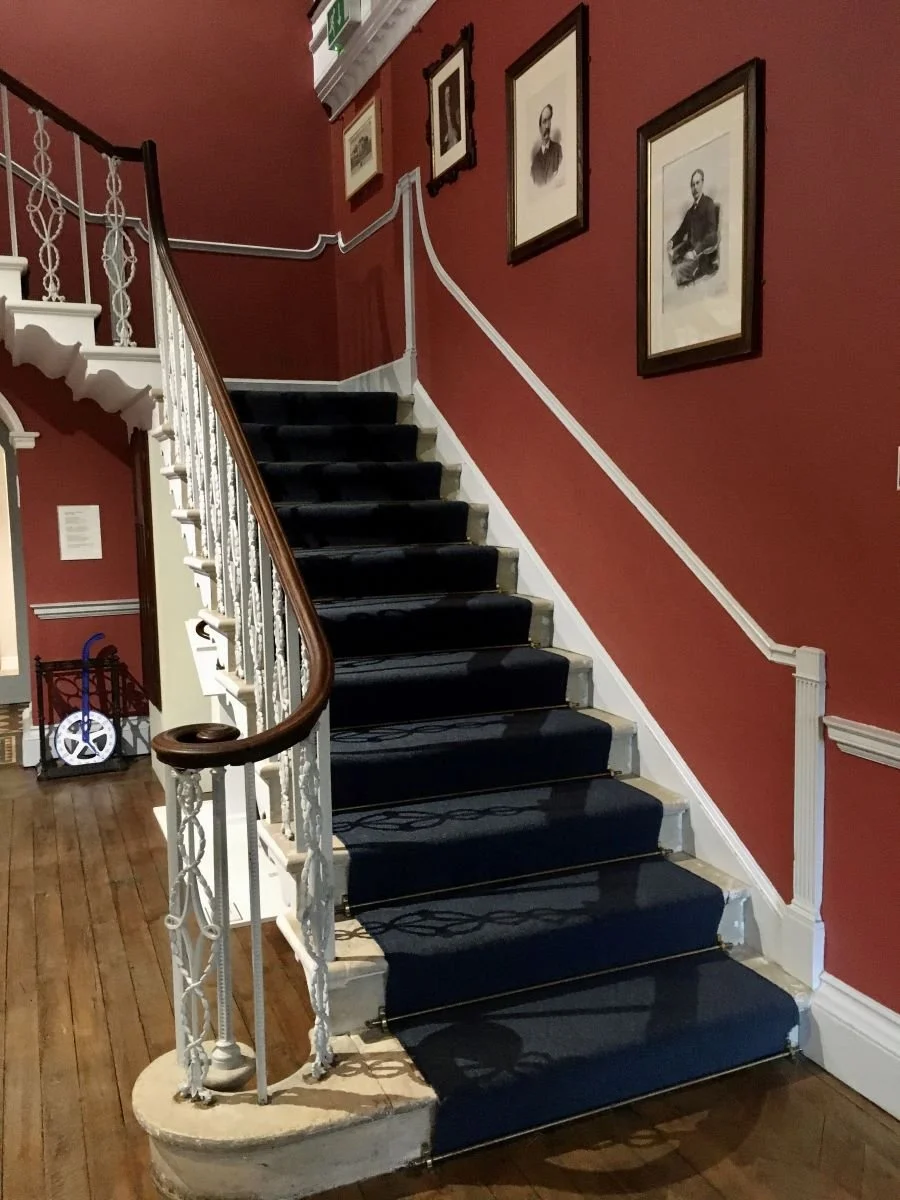
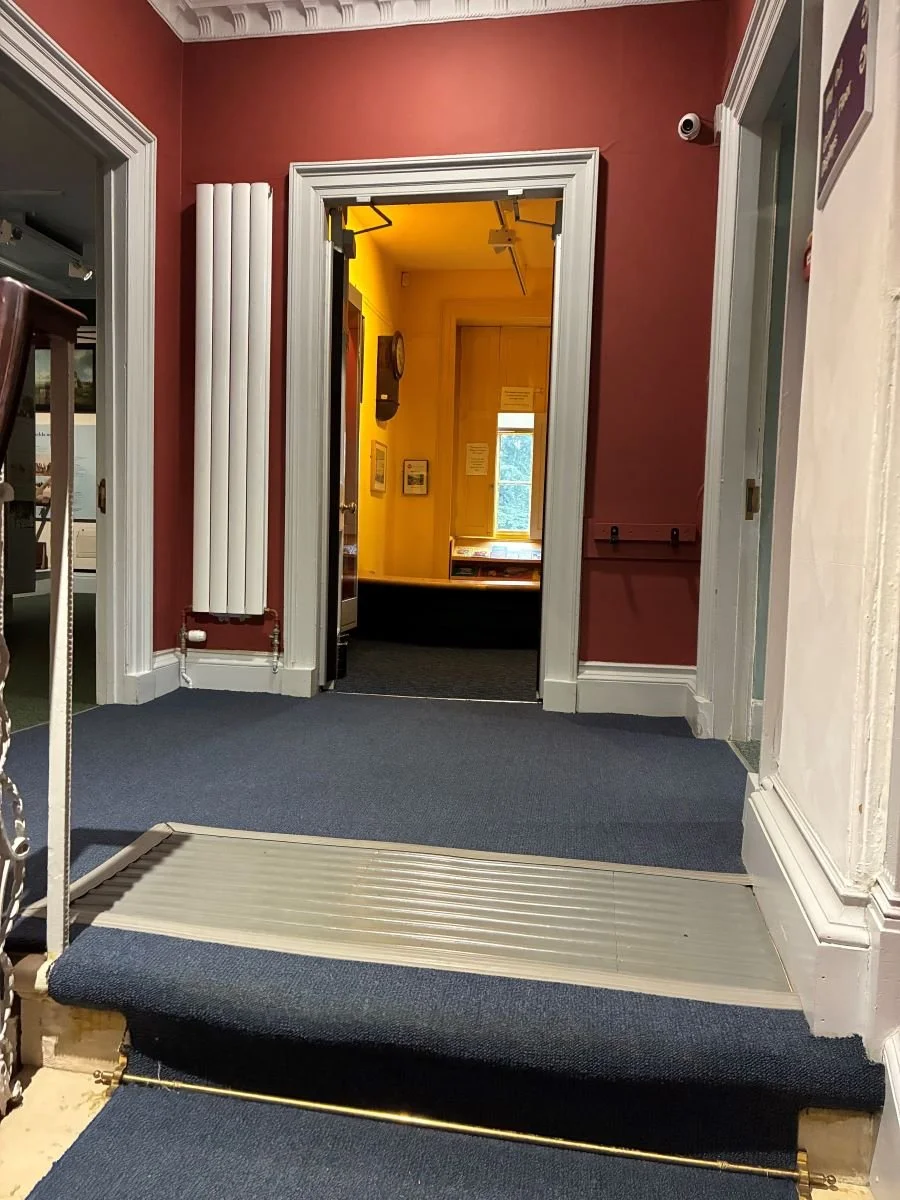
To visit the upper floor, you can use the wide stairs in Room 4, Staircase Hall.
There is a handrail on the left hand side of the stairs.
If you use the wide stairs, you will arrive in front of Room 9, Boats and Trains.
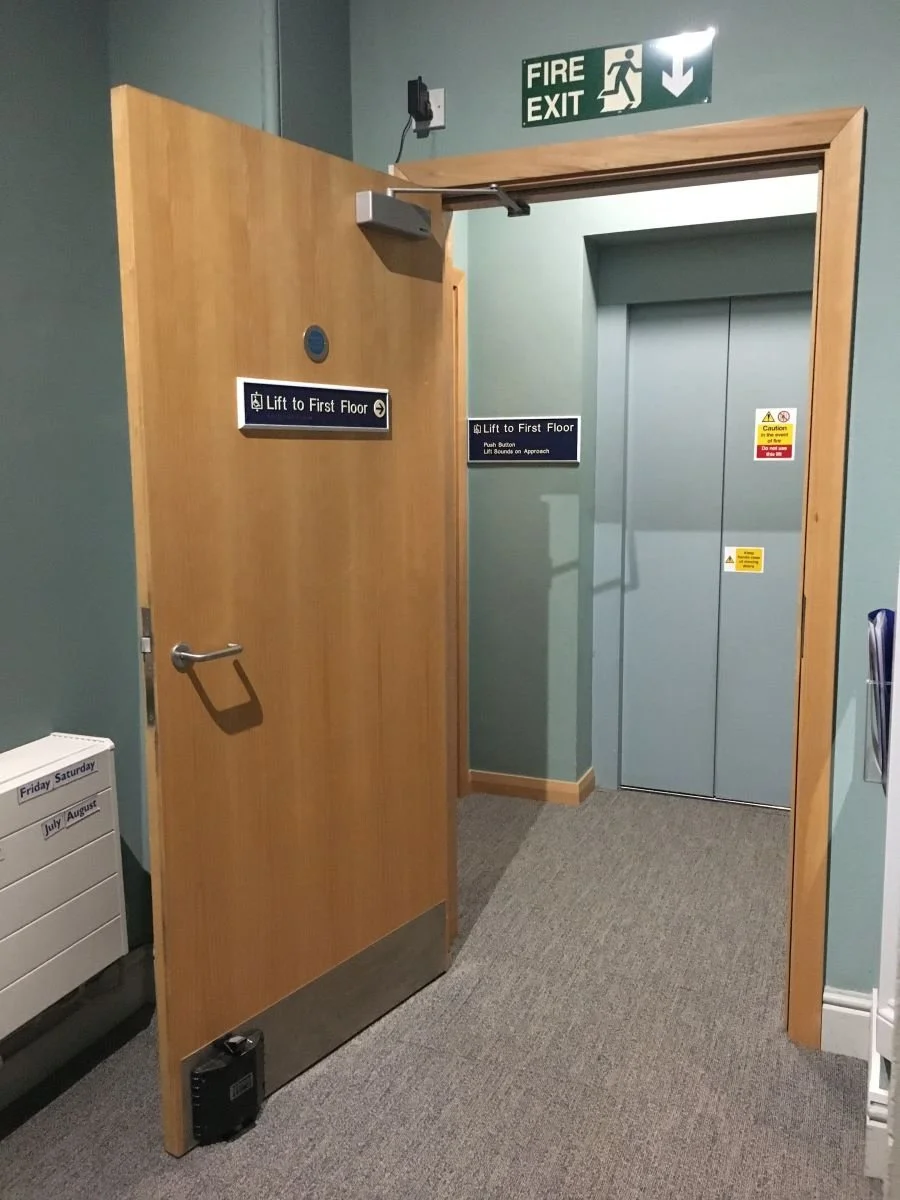
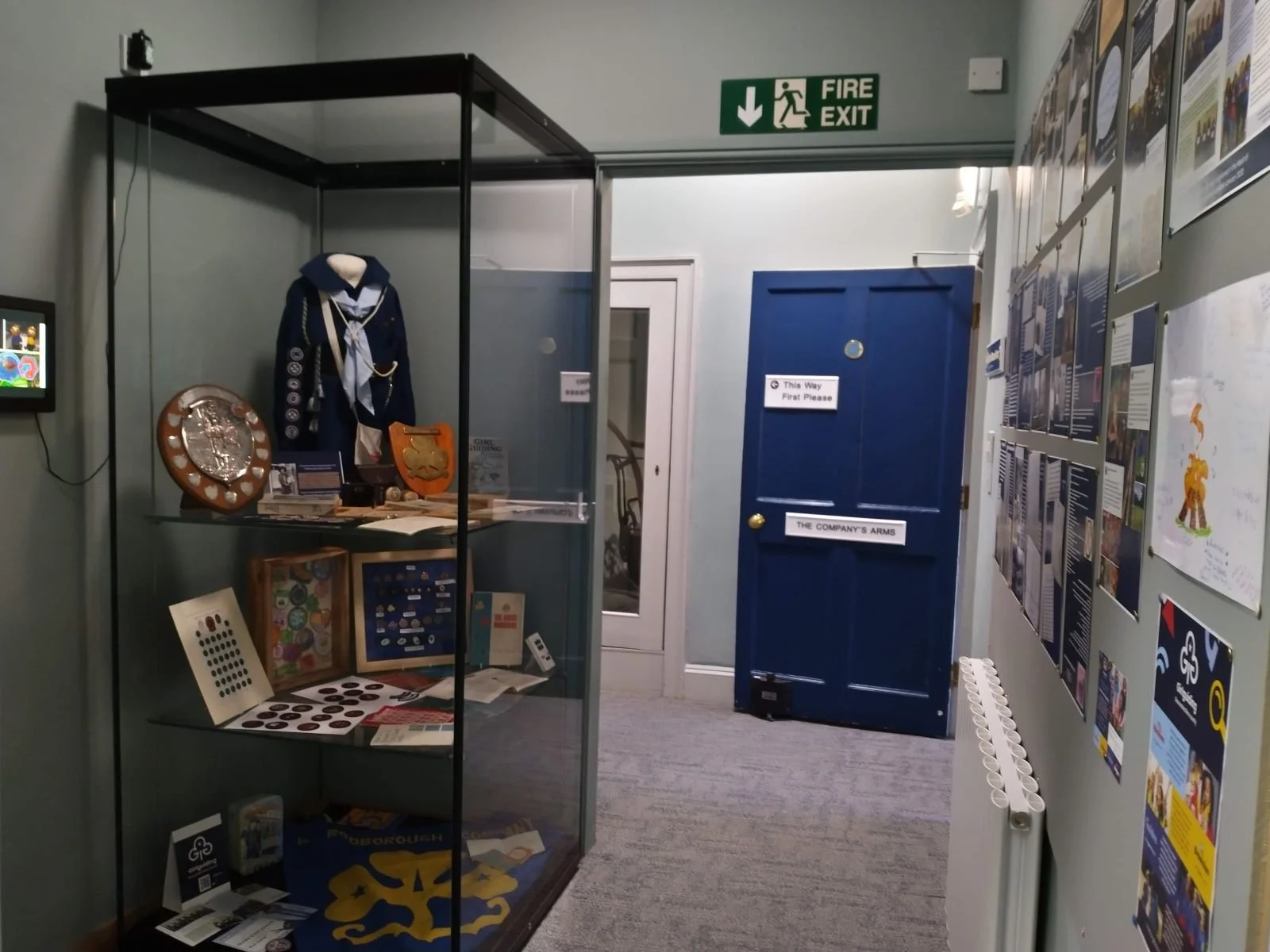
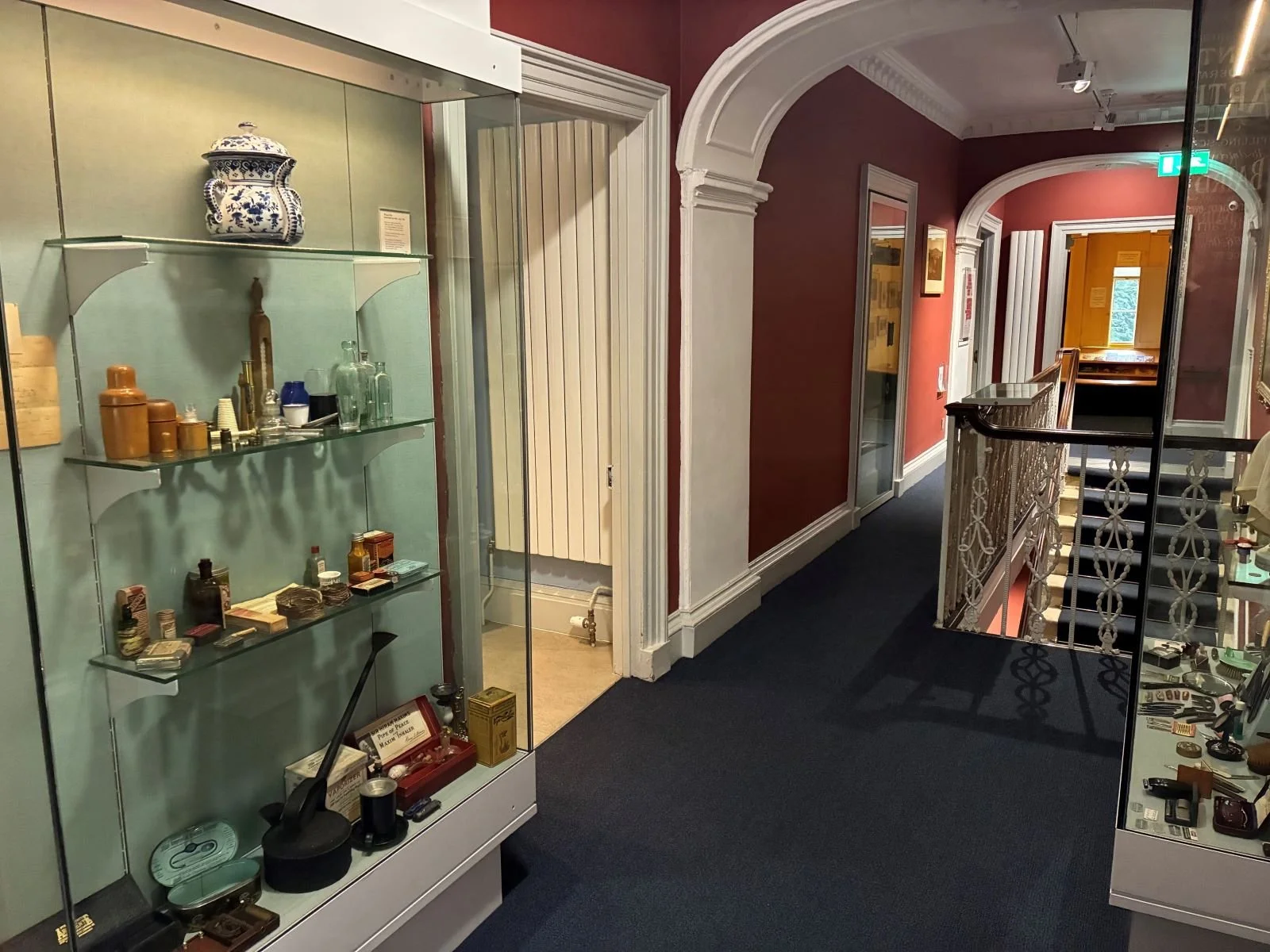
Or you can use the lift to get to the upper floor.
The lift is 1.4 x 1.1 metres. The door to get to the lift is 0.78 metres wide. There are tactile buttons in the lift. The lift journey is approximately 20 seconds.
If you use the lift to get to the upper floor, you will arrive in The Space, the community display area. To get to Room 9, Boats and Trains, turn left out of The Space. Then turn right and go towards the top of the stairs.
Upper floor in the museum
room 9, Boats and Trains. Click image to enlarge.
This is Room 9. It is called Boats and Trains.
In this room there are things to do with the canals and trainlines in the area. There are some drawings and paintings too.
This room is small. This room can be bright if it is sunny.
Families with young children often play in this room so it can be busy. You can come back to it later if you want to go in when it is quieter.
You need to step over the bench to see some of the items on display.
You can play with the jigsaws, toys and books.
Room 10, Making Sense of Our Lives. Click image to enlarge.
This is Room 10. It is called Making Sense of Our Lives.
In this room, there are displays about life events including birth, marriage and death. There are some things about religion and worship and about farming in the past.
This room contains items that are to do with death and dying. You don’t have to go in here if you don’t want to.
You can play with the farm toys and books. You can look through a small peep hole into a model of a church.
Room 11, At Home. Click image to enlarge.
This is Room 11. It is called At Home.
In this room there are objects to do with being at home in the past. There are tea sets, toys and things to do with sewing. There is also a display about people who have moved to Stroud from other countries.
This room can be bright if it is sunny outside.
You can play with the toys. You can look through the window to see views over Stratford Park.
Room 12, Childhood and Education. Click image to enlarge.
This is Room 12. It is called Childhood and Education.
In this room there are things used by children in the past. There are some clothes worn by young children, toys they played with and some old school desks.
You can play with the toys and books.
Room 13. Clean, Fit and Tidy. Click image to enlarge.
This is Room 13. It is called Clean, Fit and Tidy.
In this room are things people used to look good and stay fit and well in the past. In the little room there are things to do with going to the toilet, washing, and having a bath in the past.
This space is a corridor, plus a little room. It can be busy.
You might smell something called ‘eau-de-cologne’. This was a type of scent or perfume that was popular in the 18th and 19th centuries.
Room 18, The Space. Click image to enlarge.
This is Room 18. It is called The Space. It is the community display area.
The display here changes every few months, so please be aware that things might not look exactly the same as in the pictures, or from one visit to the next.
There is sometimes a digital screen with sounds.
You can check which display is on by looking at the What’s On page.
Room 14, Company’s Arms. Click image to enlarge.
This is Room 14. It is called Company’s Arms.
In this room are things to do with making beer, cider and ale in the past. The room is meant to feel a bit like an old pub.
This room can be busy. You can sit at the table and play traditional games, such as draughts, noughts and crosses and dominoes.
Room 15, Time Off. Click image to enlarge.
This is Room 15. It is called Time Off.
In this room are things to do with having fun in the past.
Recorded music sometimes plays in here. It comes on automatically. If you don’t like the sound, you can leave the room if you want to. It is meant to sound like the music people listened to in the past.
You can play with the toys.
room 16, Worldwide Impact. Click image to enlarge.
This is Room 16. It is called Worldwide Impact.
In this room is a display of lawnmowers and tools used to cut grass over time. There are also things and pictures to do with playing sports like tennis and cricket.
This room is really a corridor. There is quite a loud noise that sometimes plays in here. It is a recording of a mechanical lawnmower that sometimes plays automatically. If you don’t like the sound, you can do straight downstairs if you want to.
You can play with the toy lawnmower. You might smell freshly mown grass.
room 17, Industry and Invention. Click image to enlarge.
This is Room 17. It is called Industry and Invention.
In this room the displays show with things that were made and invented in Stroud in the past. There is a machine that was used to make wool cloth, and an old lawnmower. The first lawnmower was invented near Stroud.
Sometimes you might hear a recording of a mechanical lawnmower that plays automatically in Room 16 next door.
You can look at the book and play with the toys. You can touch the samples of different colours of wool cloth. You can touch the tennis ball and tennis ball cloth.
Leaving the museum displays
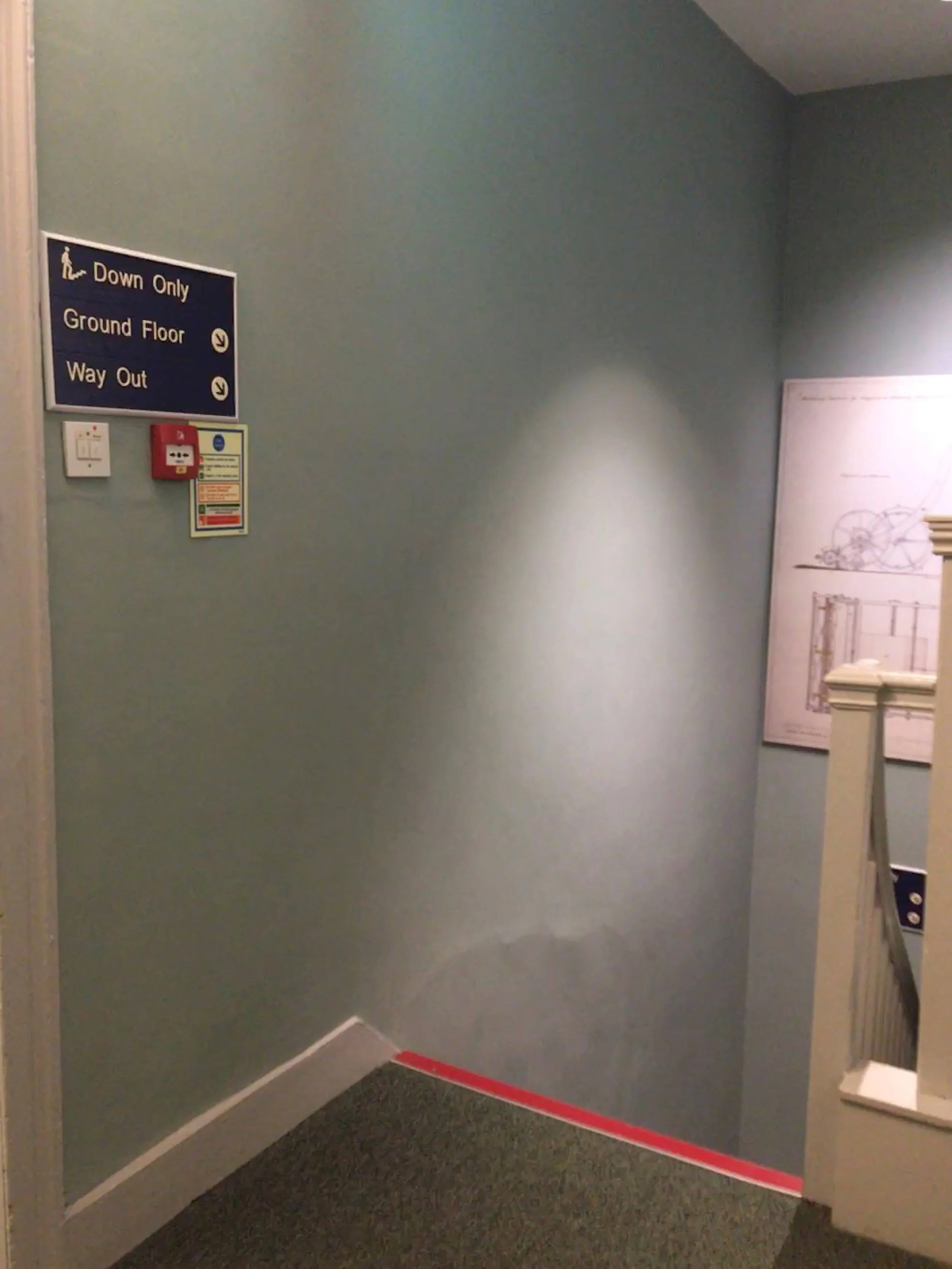
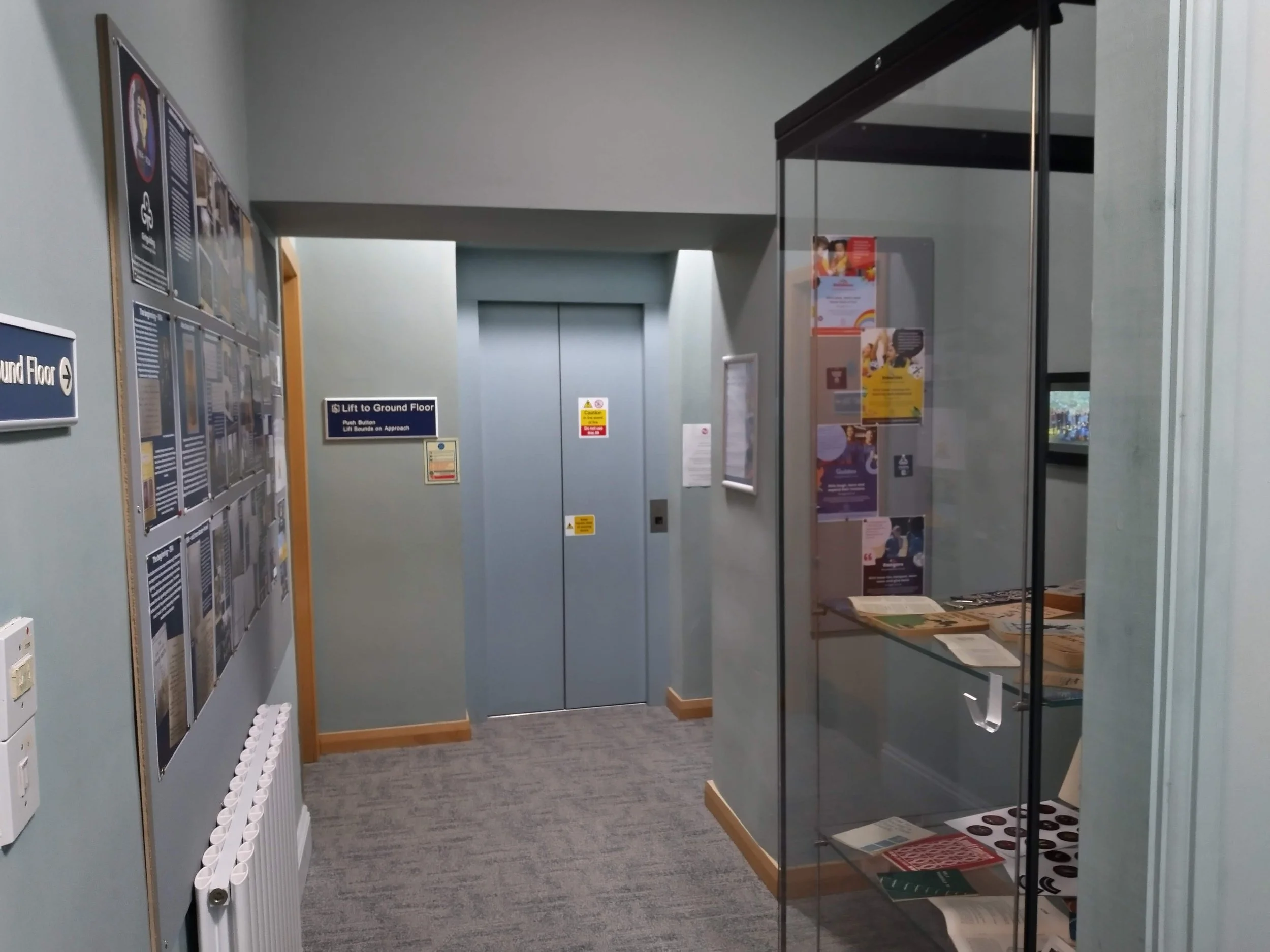
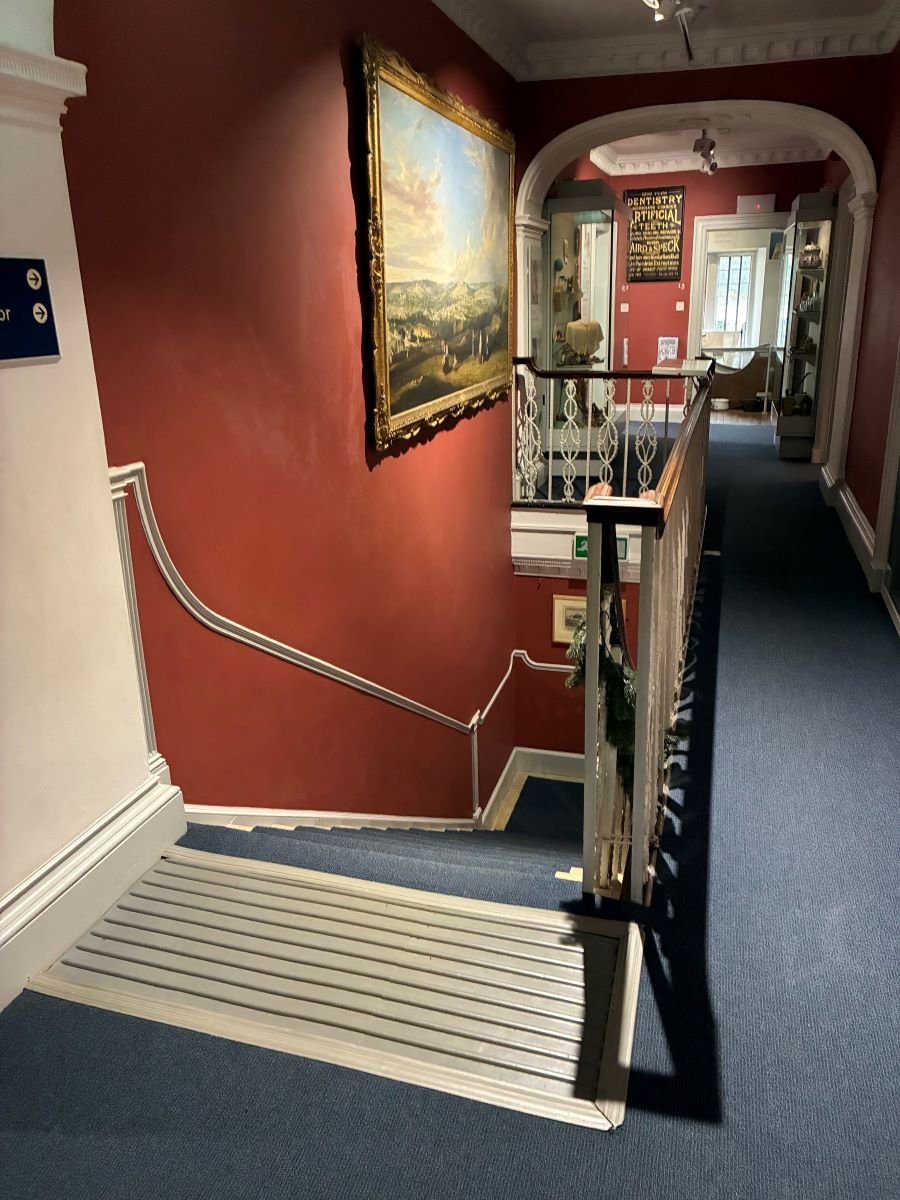
You can go back into Room 16 and down the narrow stairs.
Or you can go back to go back to the top of the wide stairs and go down into Room 4, Staircase Hall.
Or you can go back through Room 15, Time Off and Room 14, Company’s Arms to get into The Space and use the lift to get to the ground floor.
Exhibition Gallery
visitors enjoying an exhibition in the gallery. Click image to enlarge.
The exhibition gallery is in the main building, and is accessible by a ramp. The ramp is 10 metres long and 2.6 metres wide. The slope of the ramp is 1 in 38 or 2.6%. There are handrails on both sides of the ramp.
Sometimes there is an exhibition in the gallery. The exhibitions change every few weeks. You can check What’s On for details, if you want to about the exhibitions.
The appearance of the exhibition gallery, lay out of exhibits and lighting of the gallery changes with each exhibition. It won’t always look like it does in this picture.
Sometimes the exhibition gallery is closed while the museum staff change the exhibition for a different one.
Walled Garden
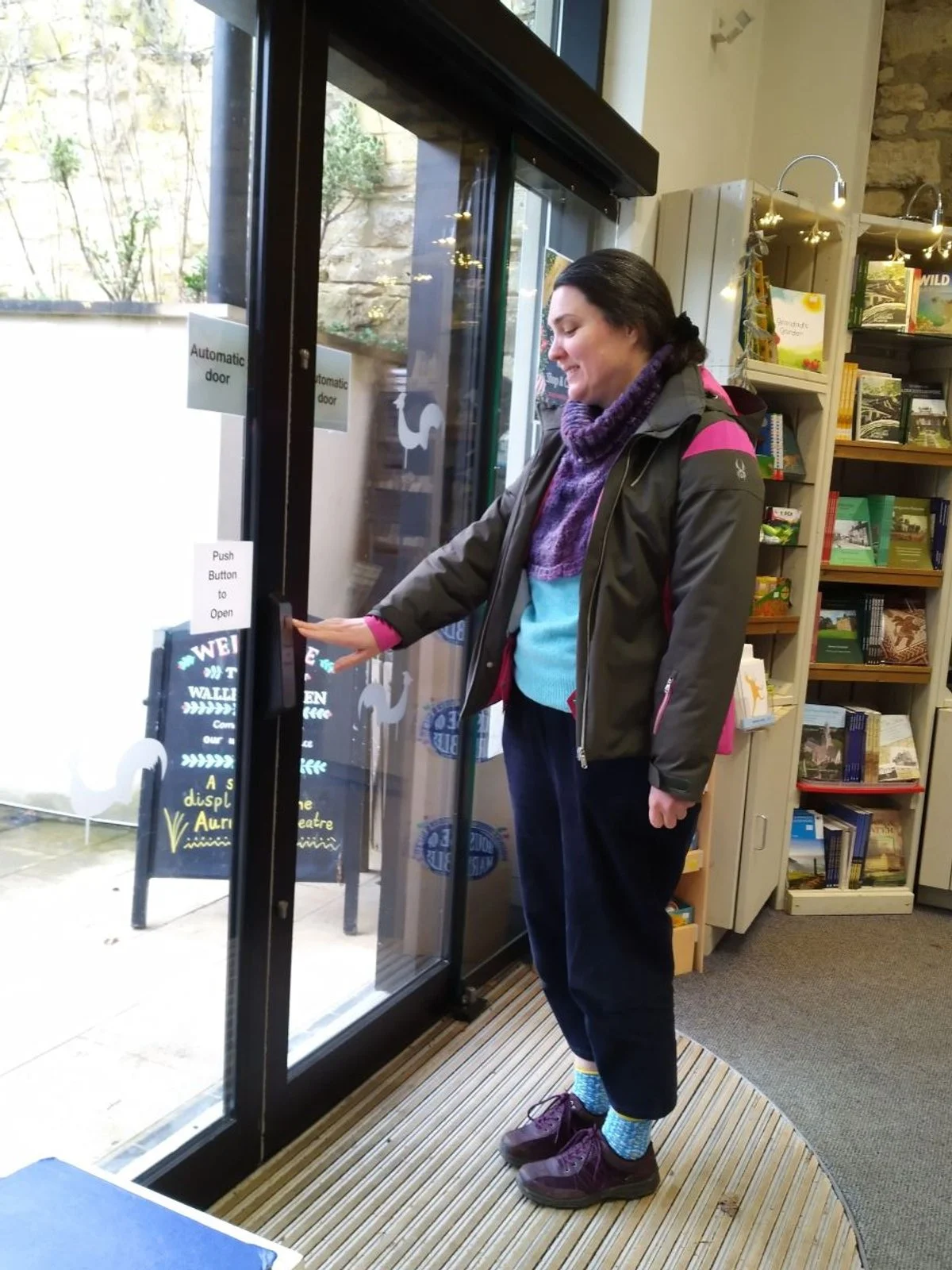
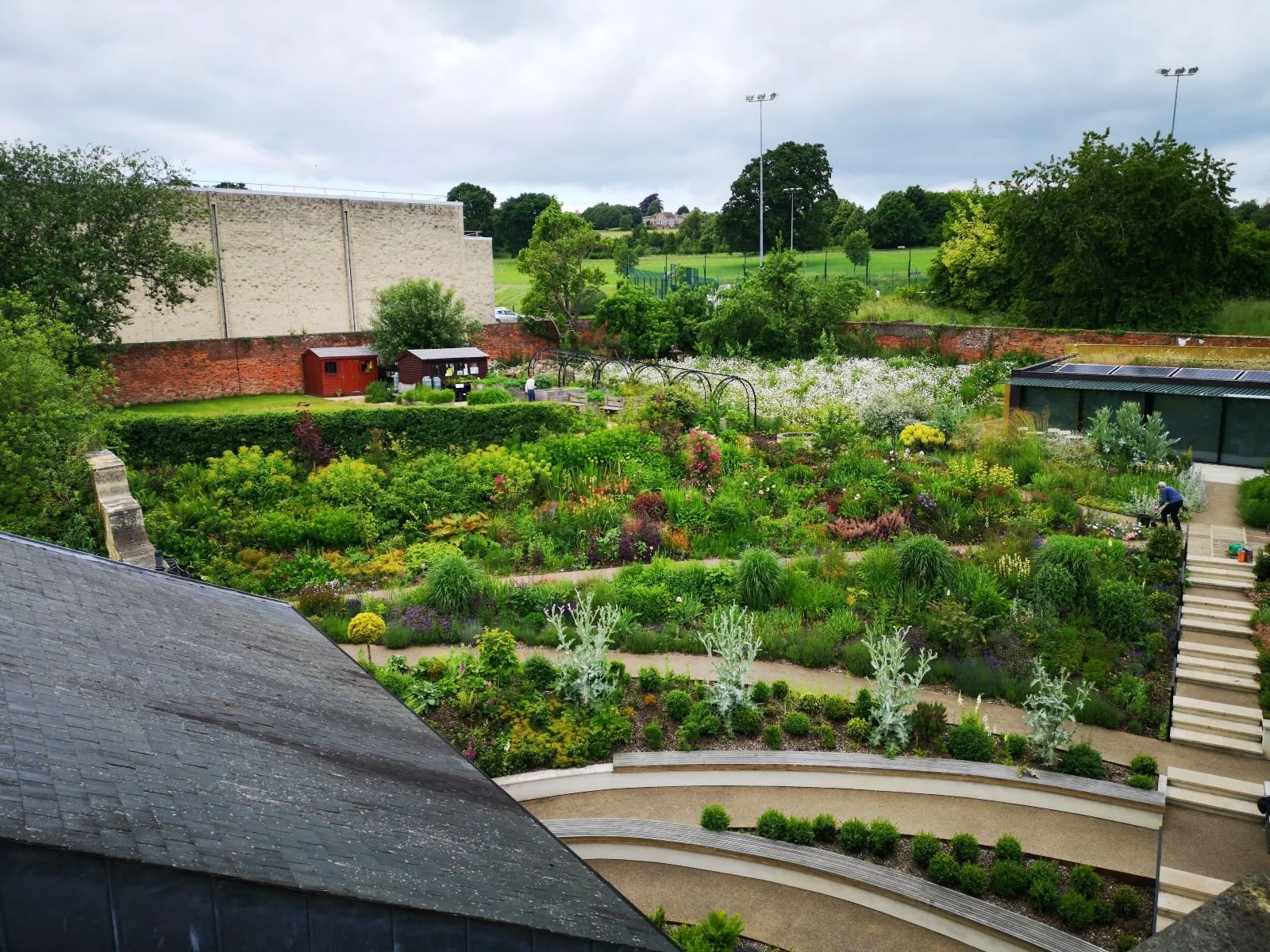
You can visit the Walled Garden, if you want to. The garden is accessed through a push-button sliding door into the garden near the Reception desk in the museum.
There are plants and trees to look at, and benches to sit on.
The door opens automatically when you come back into the museum from the garden.
There are steps, with a handrail on the left side as you go up the steps. There is also a step free ramp. There are no handrails on the ramp. The main ramp is 72.7m long by 1.47m wide, and slope is 1 in 20 or 1.28%. There are two smaller ramps 10.37m by 1.44m, slope 1.28% and 5.12m by 1.44m, slope 1.28%.
The hard paving and paths are different in different parts of the garden.
The garden changes over the year, so it please be aware that things might not look exactly the same as in the picture, or from one visit to the next.
The Pavilion and Meeting Room
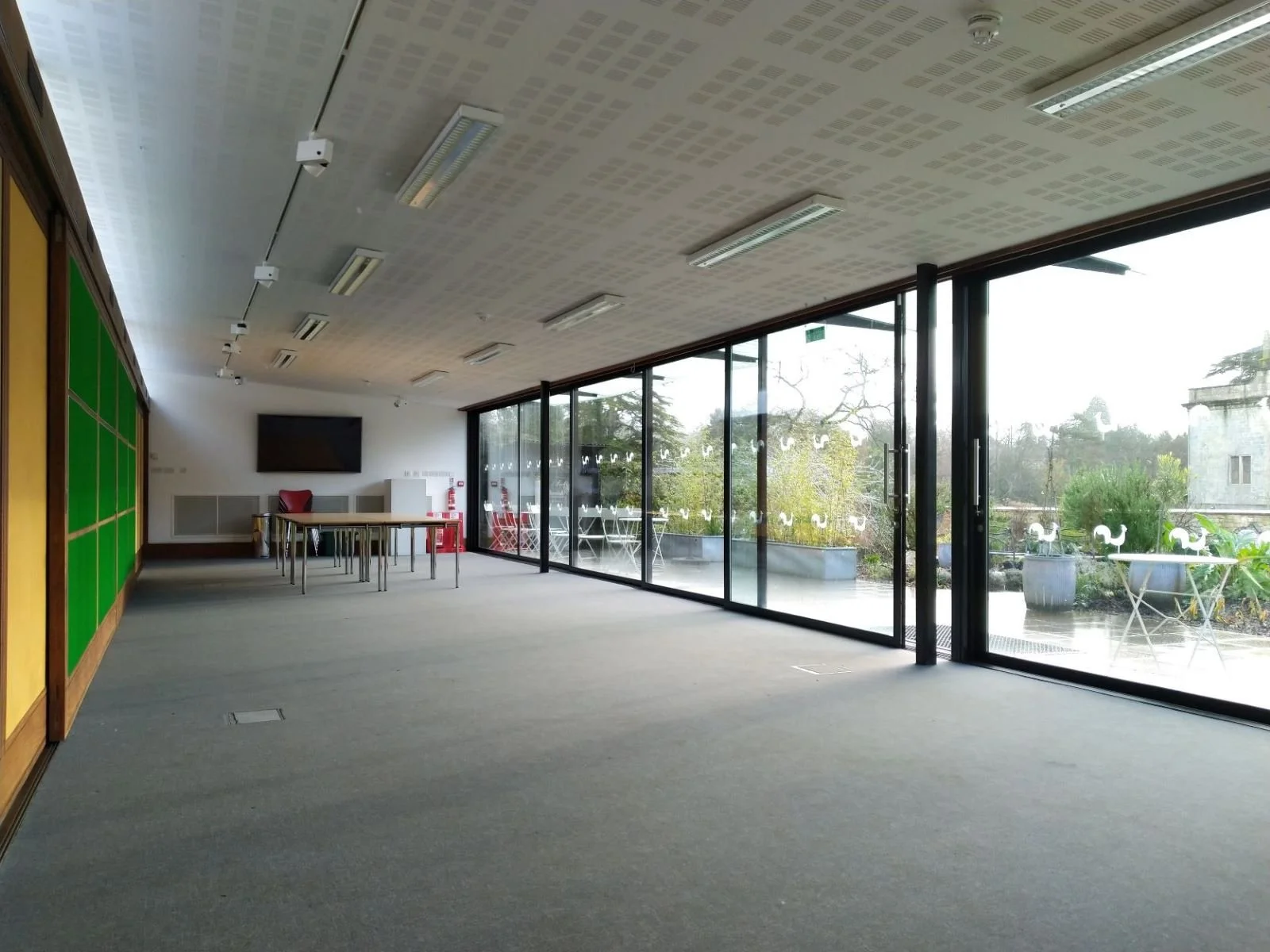
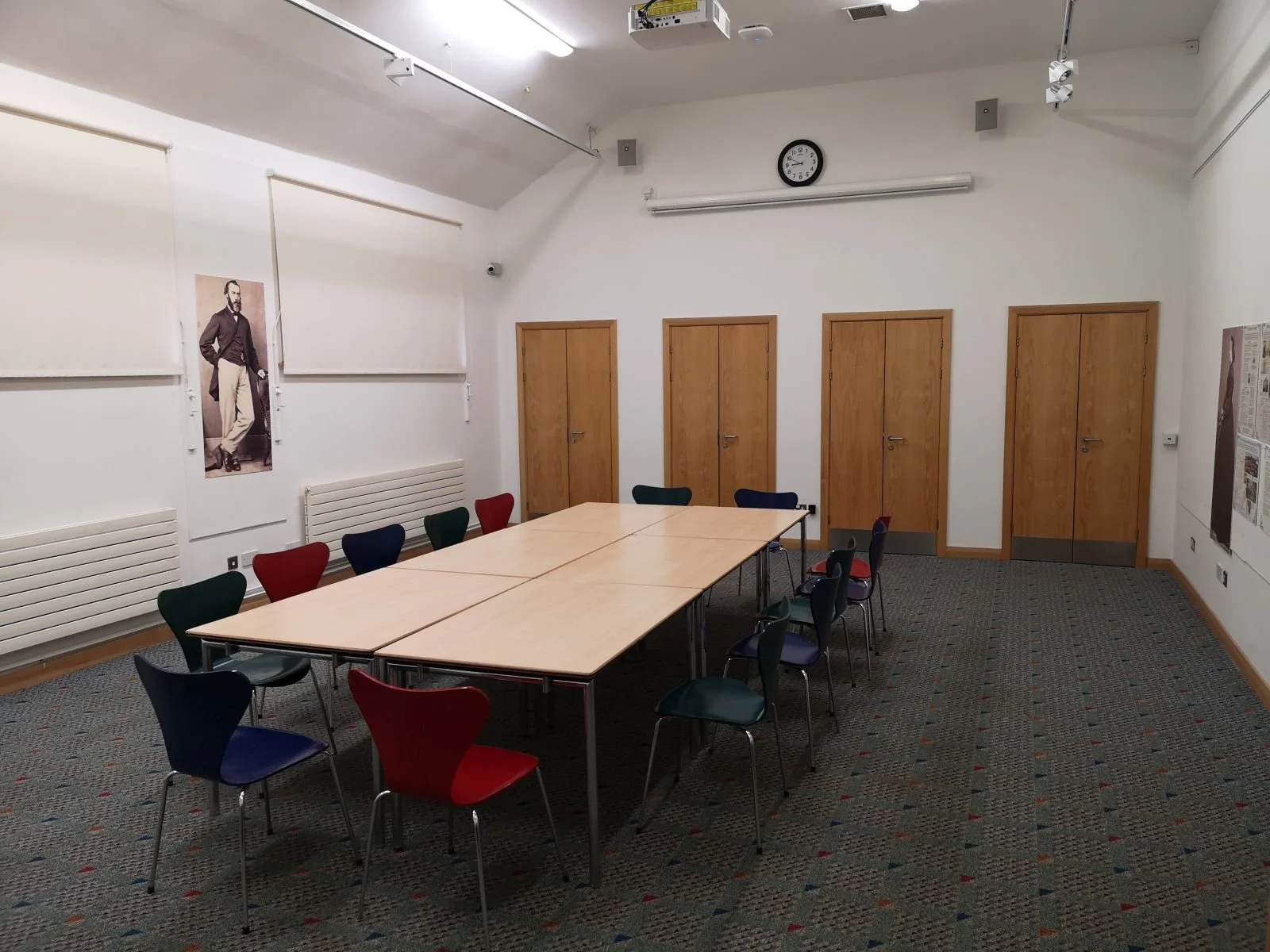
The Pavilion and Meeting Room are used by pre-booked groups. They are also used for some events and activities.
The Pavilion is at the top of the Walled Garden, and is accessible by a ramp or steps. The main ramp is 72.7m long by 1.47m wide, and slope is 1 in 20 or 1.28%. There are two smaller ramps 10.37m by 1.44m, slope 1.28% and 5.12m by 1.44m, slope 1.28%. There are no handrails on the ramps. There is a handrail on the left side of the steps. There is a Hearing Loop in the Pavilion.
The Meeting Room is in the main building, and is accessible by a ramp. The ramp is 10 metres long and 2.6 metres wide. The slope of the ramp is 1 in 38 or 2.6%. There are handrails on both sides of the ramp. There is a Hearing Loop in the Meeting Room.
Places you can't go in the museum
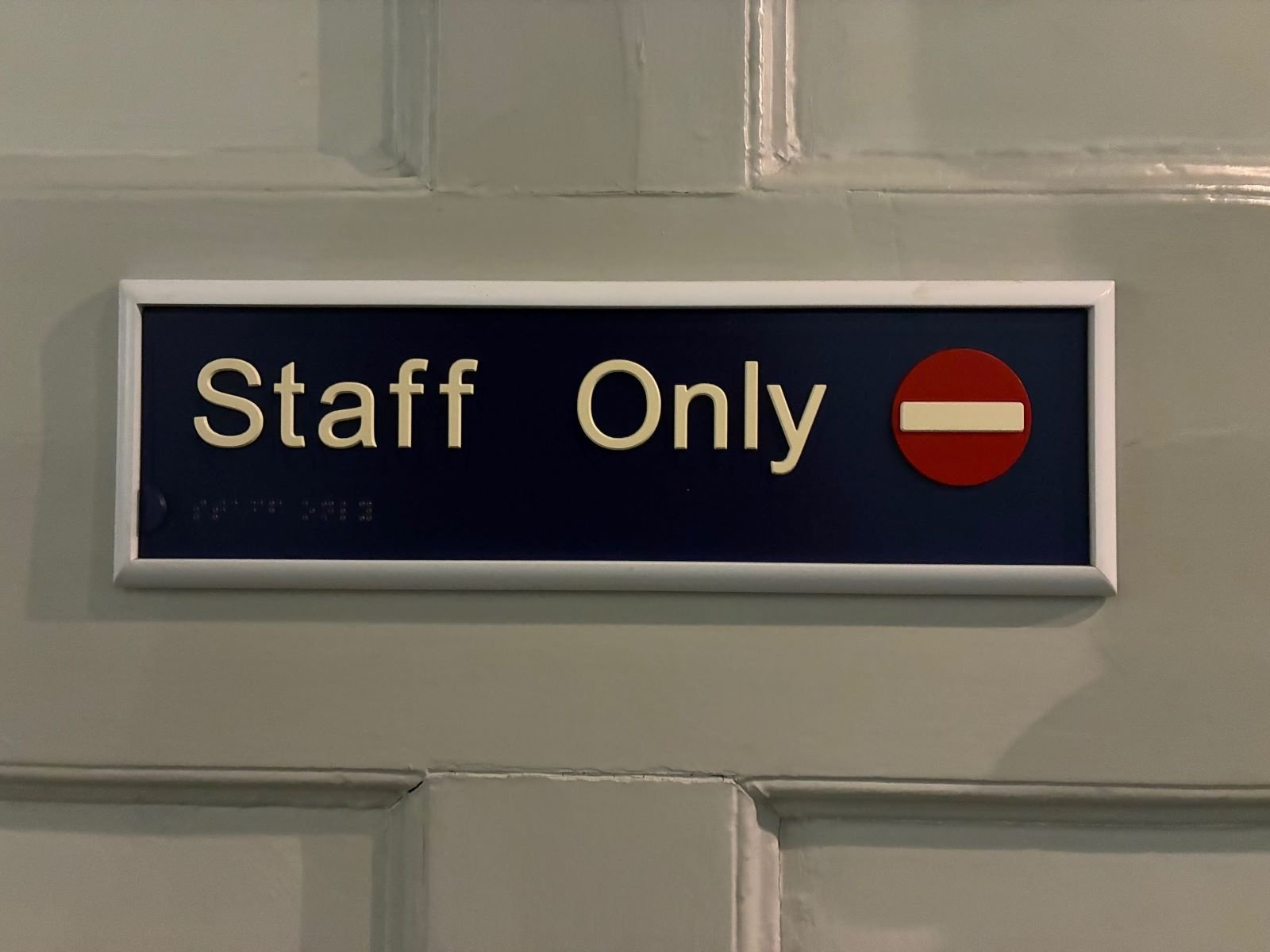
There are some areas of the museum that are only for people who work here.
Signs like this tell that you can’t go in these areas.
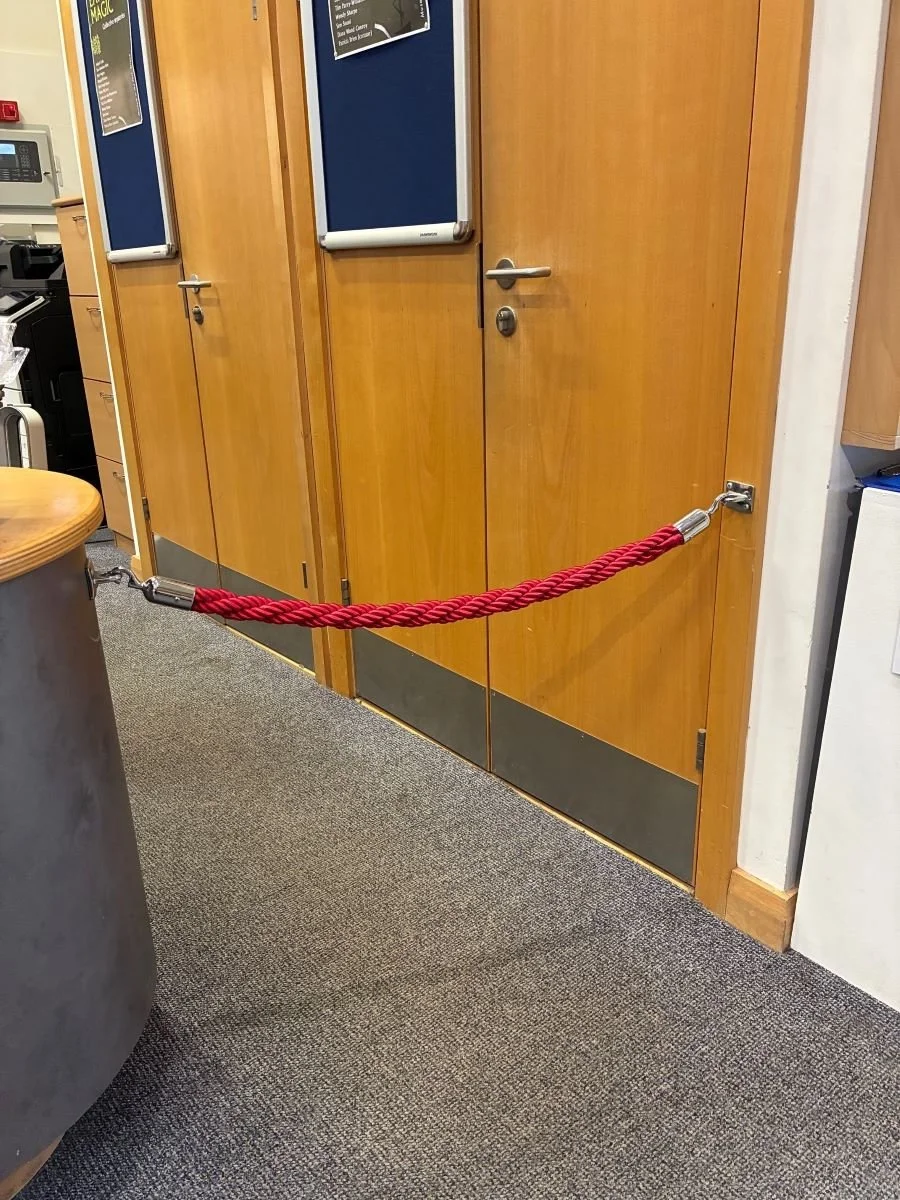
Sometimes there is a rope across an entrance to show that you can’t go into an area.
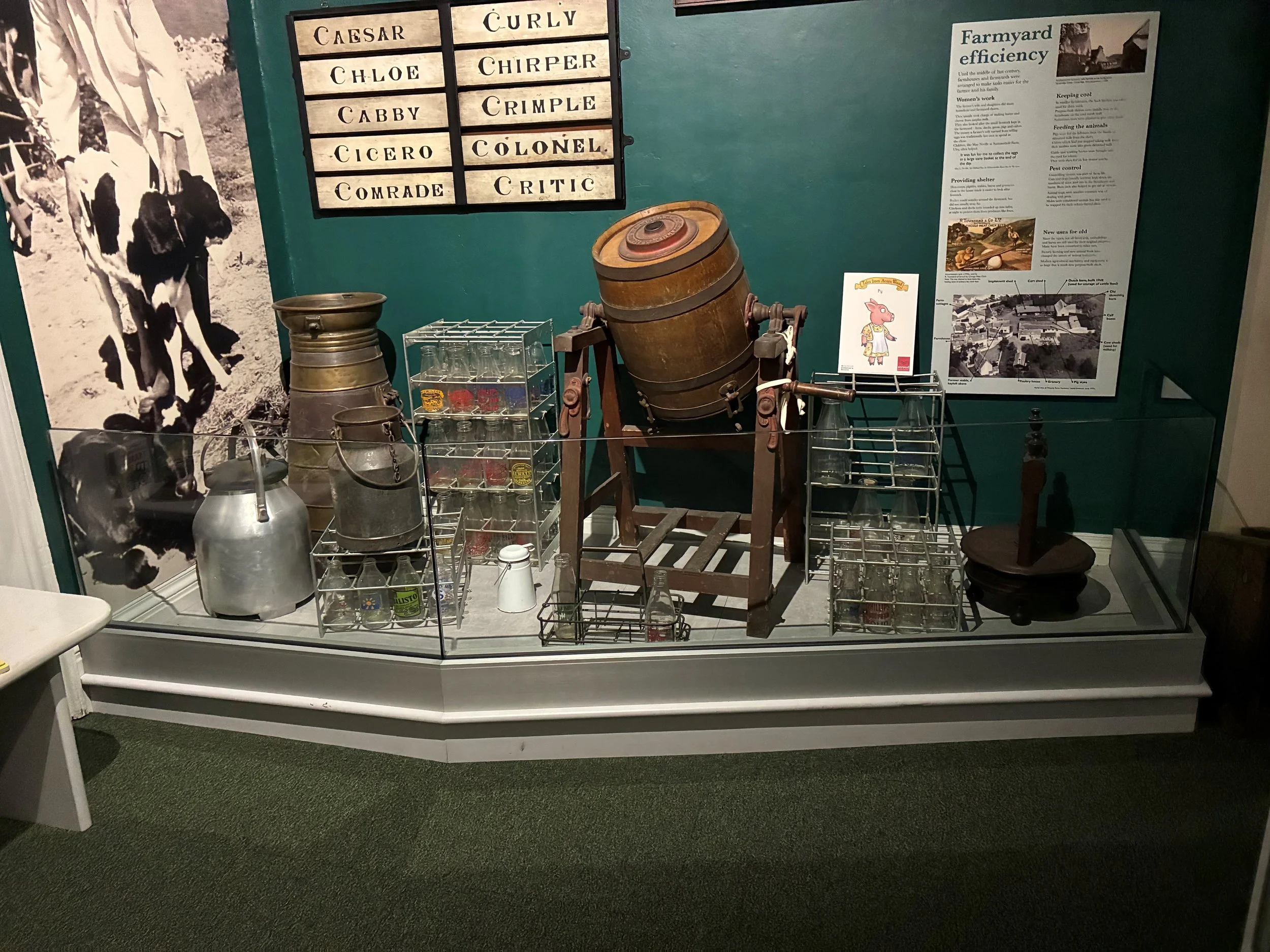
Some display areas are raised and might have glass around them. You can’t go on the raised areas, or go behind the glass.
Leaving the museum
Leave the museum by the main entrance. Click image to enlarge.
You can leave the museum through the main entrance door into the courtyard. The door automatically opens and closes.
Emergency Information
Follow the fire exit signs in if the fire alarm sounds. Click image to enlarge.
You might want to know about this information in case there is an emergency whilst you are at the museum. The fire alarm is a loud bell. There are also visual alarms in the form of red lights that flash when the fire alarm is activated. If you hear this bell or see the visual alarm, try and stay calm. You will also need to leave the building, garden or courtyard.
During a fire alarm the lift will stop working. You will need to go down the stairs if you are upstairs. If you can’t use the stairs you can wait at the top of the stairs. The museum staff will make sure the emergency services know you are there.
The fire doors inside the museum will close loudly. You will need to open them using the handle. They may feel heavy when you try to open them. You need to follow the green fire exit signs to the nearest fire exit.
If you came with a group, you should try and stay with the people you came with. The museum staff will help me if you are unsure.
Visiting Stratford Park
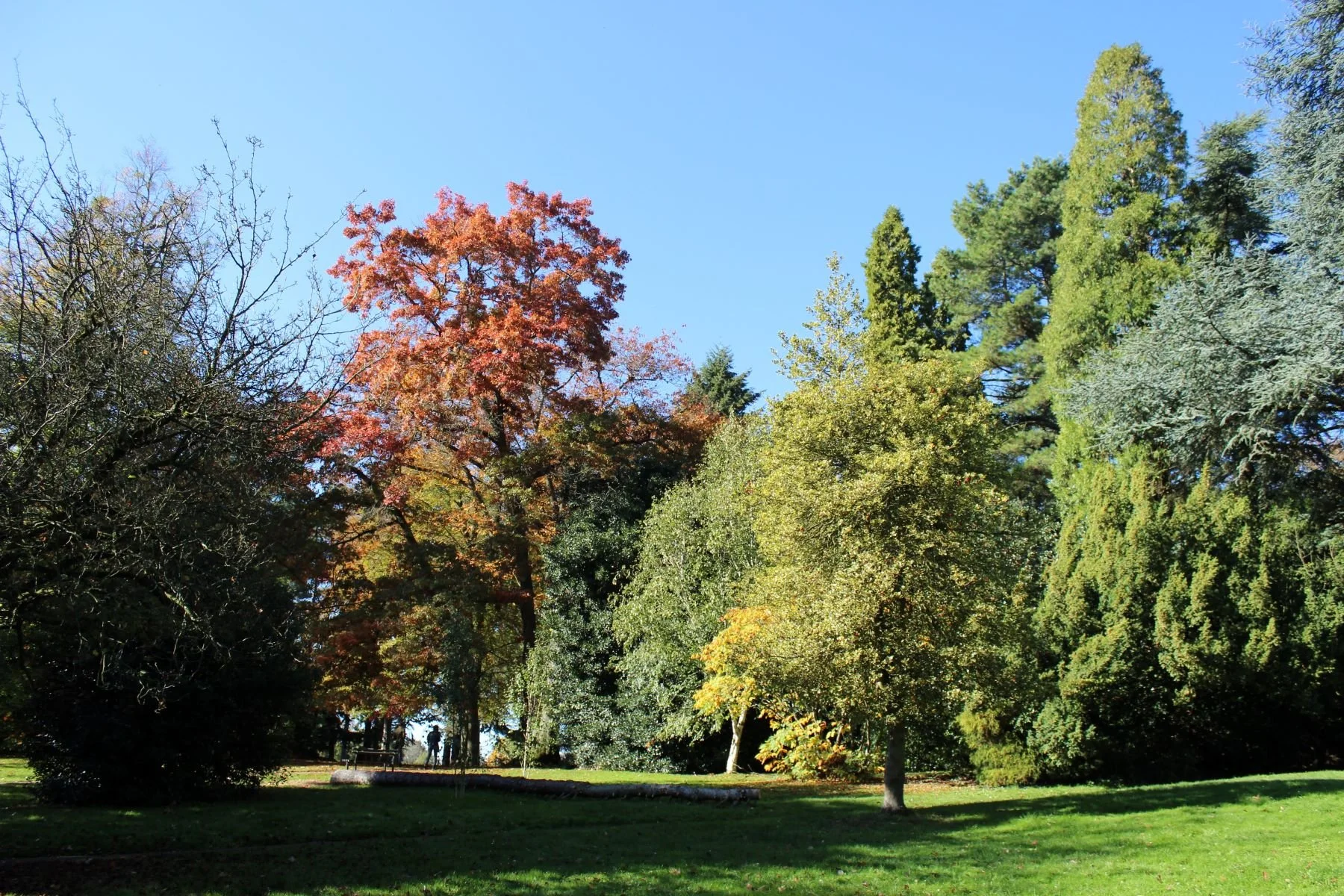
Stratford Park in Stroud. Click image to enlarge.
Museum in the Park is in Stratford Park, in Stroud. You can visit the park if you want to. In the park there are lots of trees and large grassy lawns. There is a lake and a bandstand. There are two children’s play areas, and a miniature railway (on selected dates). There is a woodland too. There are lots of benches in the park. There are toilets near the car park.
There is more information about the park online: https://myactivelifestyles.co.uk/centres/stratford-park/
More information
There will also be print-friendly visual story and an easy read visual story available in 2026.
There is also more information for visitors with additional access requirements.
A detailed access statement is available. This describes all aspects of a visit to the Museum in the Park.
Museum in the Park would like to thank the people who consulted and provided feedback about our visual story, including

